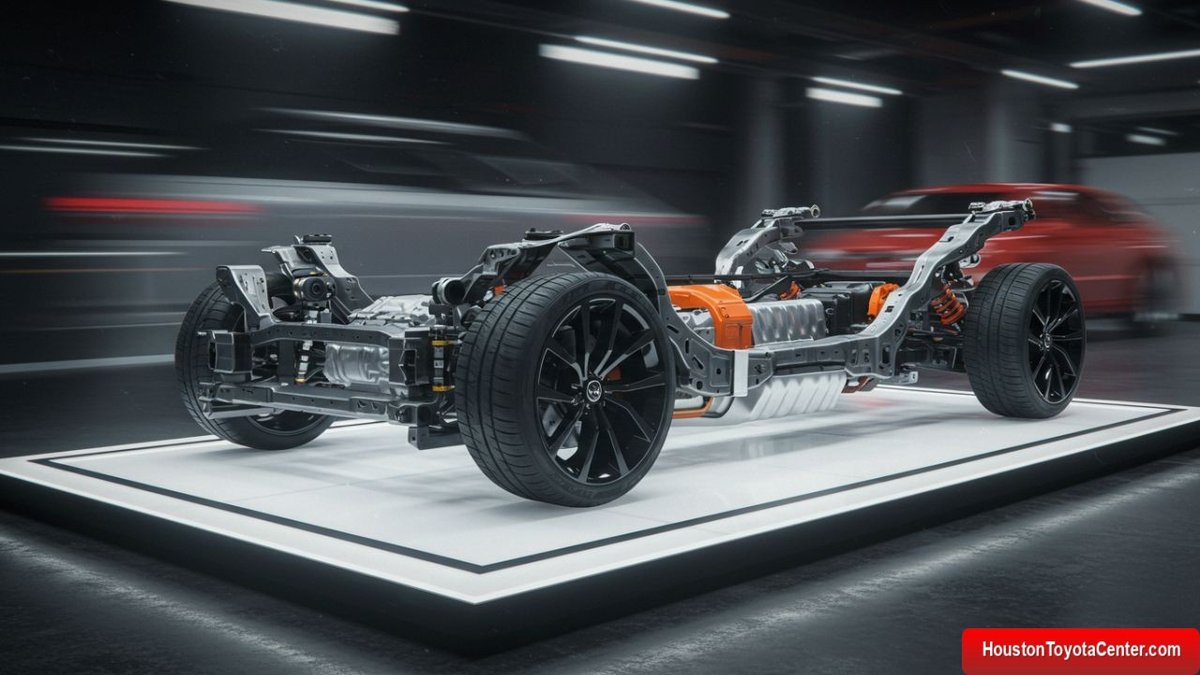
Toyota has long been synonymous with reliability, but beneath that steadfast reputation lies a relentless drive for evolution. For the last decade, that evolution has been largely powered by one fundamental innovation: the Toyota New Global Architecture, or TNGA. This isn't just a new chassis; it's a complete paradigm shift in how Toyota designs, engineers, and manufactures its vehicles, laying the groundwork for the Current & Future Outlook (12th Gen Onward): TNGA Platform & Hybridization. It’s the backbone enabling the brand's ambitious goals for efficiency, safety, and a genuinely engaging driving experience, especially as we look toward an increasingly electrified future.
At a Glance: What TNGA and Hybridization Mean for You
- Foundation for Everything: TNGA isn't just a platform; it's a modular vehicle architecture underpinning almost every new Toyota and Lexus model, from compact sedans to large SUVs and even pure EVs.
- Better Driving: Expect a more engaging feel at the wheel, thanks to a lower center of gravity, increased chassis rigidity, and finely tuned suspensions.
- Enhanced Safety: TNGA-based vehicles are designed from the ground up to integrate advanced safety systems and offer superior crash protection.
- Fuel Efficiency Focus: The architecture is optimized for hybrid powertrains, ensuring seamless integration and maximizing MPG figures across the board.
- Design Flexibility: From sleek sedans to rugged trucks, TNGA allows for diverse vehicle designs while leveraging shared components, leading to faster development and better value.
- Continuous Evolution: TNGA is not static. It's constantly refined and updated, ensuring that future generations of vehicles—like the upcoming iterations from the 12th gen onward—continue to push boundaries.
- Multi-Pathway Electrification: TNGA supports Toyota's strategy for a diverse electrified future, accommodating hybrids (HEV), plug-in hybrids (PHEV), battery electric vehicles (BEV), and even fuel cell electric vehicles (FCEV) on common architectures.
More Than Just Metal: The TNGA Revolution Explained
Imagine a sprawling, intricate Lego set where every piece, from the smallest connector to the largest block, is designed to fit together perfectly, creating a robust, adaptable structure. That's essentially Toyota's New Global Architecture (TNGA). Launched with the fourth-generation Prius in 2015, TNGA isn't just about sharing parts; it's a holistic engineering and manufacturing philosophy designed to transform how Toyota builds "ever-better cars."
At its heart, TNGA is about structural innovation. It's a comprehensive approach to remaking core components: the powertrain units (engines, transmissions, hybrid systems) and the foundational frames (chassis). This integrated product development aims for rapid, dramatic improvements in the fundamental aspects of driving: moving, turning, and stopping. The result? Vehicles that aren't just reliable, but also genuinely enjoyable to drive, with enhanced safety and impressive fuel efficiency baked in from the start.
The TNGA Family Tree: Platforms for Every Purpose
One of TNGA's most powerful attributes is its modularity. It's not a one-size-fits-all solution, but rather a family of platforms, each tailored to specific vehicle sizes and types, all sharing common design principles and manufacturing efficiencies. This allows Toyota to achieve design flexibility without sacrificing the core benefits.
Here’s a quick tour through the TNGA lineup:
- TNGA B: This compact platform underpins Toyota's smaller, agile vehicles. Think of the zippy Toyota Yaris, the stylish Raize, the versatile C-HR, and the premium Lexus LBX. It’s engineered for a low center of gravity, enhanced rigidity, and a surprisingly comfortable ride for its segment. It’s also where you'll find some versions of
Toyota's popular Corolla lineup, showcasing its adaptability. - TNGA C: Moving up to mid-sized vehicles, the TNGA C platform delivers a balance of spaciousness, safety, and dynamic performance. This is the foundation for ubiquitous models like the Toyota Camry and Avalon (though the Avalon is now largely replaced by the Crown), along with practical options like the Voxy and Noah. It ensures a refined driving experience alongside ample cabin room.
- TNGA F: When durability, ruggedness, and capability are paramount, the TNGA F platform steps in. Designed for larger SUVs and trucks, it provides improved handling and a comfortable ride even when tackling tougher terrain or hauling significant loads. You'll find it beneath popular models such as the Lexus NX, RX, and the family-favorite Toyota Highlander.
- TNGA K: This variant is dedicated to high-performance vehicles, emphasizing an engaging driving experience. According to Toyota's internal architecture definitions, it's characterized by a low center of gravity and improved rigidity. This is the platform designated for vehicles like the Toyota Supra in Toyota's TNGA categorization.
- TNGA L: For the pinnacle of luxury and technological sophistication, there’s TNGA L. This platform is engineered to offer superior comfort, cutting-edge safety features, and advanced technology integration, as seen in models like the opulent Lexus LS and the innovative hydrogen fuel cell Toyota Mirai.
- e-TNGA: Looking squarely at the electric future, e-TNGA is Toyota's dedicated platform for battery electric vehicles (BEVs). It’s specifically designed to house large battery packs, ensuring a low center of gravity, optimized range, and compatibility with fast-charging technologies. The Toyota bZ4X and Lexus UX 300e are prime examples of vehicles built on this forward-thinking architecture.
The "Smart Monozukuri" Ethos: Building Better, Smarter
TNGA isn't just about engineering; it's deeply intertwined with Toyota’s unique manufacturing philosophy, "Smart Monozukuri." This approach fosters collaboration with suppliers and production sites, creating a synergistic cycle that promotes "Well-built Cars." By optimizing shared components and processes, Toyota significantly reduces development resources.
What does this mean for consumers? It means the savings aren't just pocketed; they're reinvested directly into improving quality, enhancing product performance, and accelerating timely delivery of new models. This continuous improvement loop, combined with Toyota's product-based in-house company system, empowers faster decision-making tailored to specific market and regional needs, ultimately leading to "aisha"—cars beloved by customers. From the iconic Toyota Corolla to the cutting-edge bZ4X, this ethos is evident in every new model.
Hybridization: TNGA's Natural Partner in an Electrified World
Toyota didn't just stumble into hybridization; it pioneered the technology decades ago. With TNGA, that commitment to electrification has been amplified. The architecture itself is designed to seamlessly integrate hybrid powertrains, optimizing their performance and packaging.
Why TNGA is a Hybridization Game-Changer:
- Optimized Packaging: TNGA’s design allows for lower engine placement and more compact hybrid components (like batteries and electric motors). This creates more interior space, a lower center of gravity for better handling, and improved weight distribution.
- Increased Efficiency: The inherent rigidity and lighter weight of TNGA platforms work in tandem with hybrid systems to squeeze out every possible mile per gallon. Less energy is wasted flexing the chassis, and lighter vehicles require less energy to move.
- Scalability: TNGA's modularity means that hybrid systems can be easily adapted across various platforms (TNGA B, C, F, L), accelerating the rollout of electrified options across nearly all vehicle segments.
- Multi-Pathway Approach: While e-TNGA handles pure EVs, the core TNGA platforms are perfectly suited for integrating various levels of electrification – from mild hybrids to robust full hybrids (HEV), and increasingly, plug-in hybrids (PHEV). This multi-pathway strategy acknowledges that different markets and customer needs require diverse solutions on the journey to carbon neutrality.
This synergy means that vehicles like the latest RAV4 Hybrid, Highlander Hybrid, orthe new Toyota Corolla Hybridaren't just slapping a battery onto an existing car; they're fundamentally designed to be efficient, dynamic hybrid vehicles from the ground up.
The Driving Experience: What TNGA Means for You Behind the Wheel
Forget the old stereotype of a "boring but reliable" Toyota. TNGA is engineered to deliver a genuinely engaging and comfortable driving experience.
- Agility and Control: A lower center of gravity, thanks to clever engine and component placement, means less body roll in corners and a more planted feel on the road. Increased chassis rigidity reduces flex, translating directly into more precise steering feedback and a sense of direct control.
- Refined Ride Quality: TNGA vehicles often feature more sophisticated suspension designs and tuning. This leads to a smoother, more composed ride over various road surfaces, absorbing bumps without feeling floaty or disconnected.
- Quieter Cabins: The rigid structure also helps to suppress road noise and vibrations, contributing to a more serene and premium cabin environment.
- Enhanced Safety: Beyond the driving dynamics, TNGA provides a robust foundation for safety. Its inherent strength and design facilitate optimal energy absorption in a collision, while also creating a solid base for integrating advanced driver-assistance systems (ADAS) like Toyota Safety Sense.
For drivers, this translates to a car that feels more responsive, more comfortable on long journeys, and instills greater confidence in various driving situations.
Current & Future Outlook (12th Gen Onward): TNGA and the Next Decade
The journey of TNGA began in 2015, and it has already permeated over 40 vehicle models worldwide. The fifth-generation Prius, launched in 2023, is a testament to the "matured second-generation TNGA," showcasing innovative styling and significantly improved driving performance. But TNGA is far from static; it’s a living, evolving architecture.
As we look toward the 12th generation of various Toyota models and beyond, the future of TNGA and its integration with hybridization promises several exciting developments:
- Deeper Electrification Integration: Expect TNGA to become even more optimized for all forms of electrification. This means not just more hybrids, but also a significant expansion of plug-in hybrid (PHEV) options across the lineup, offering longer electric-only ranges and faster charging. The e-TNGA platform will continue to evolve rapidly, leading to a broader array of dedicated battery electric vehicles (BEVs) with enhanced range, performance, and charging speeds.
- Software-Defined Vehicles (SDVs): The robust electrical architecture of TNGA provides an excellent foundation for future software-defined vehicles. This means more over-the-air (OTA) updates, more personalized driving experiences, and the ability to add new features and capabilities throughout a vehicle's lifespan.
- Autonomous Driving Readiness: TNGA's structural integrity and integrated electrical systems are crucial for the seamless adoption of increasingly sophisticated autonomous driving technologies, ensuring a stable and reliable platform for sensors, processors, and safety overrides.
- Advanced Materials and Manufacturing: Expect continued innovation in materials science and manufacturing processes. Lighter, stronger, and more sustainably produced materials will be integrated into future TNGA iterations, further improving efficiency, safety, and environmental impact.
- Global Harmonization with Regional Specificity: TNGA’s flexibility allows for global economies of scale while still enabling regional tuning and design elements. Future iterations will likely refine this balance, offering core excellence with bespoke touches that resonate with local markets, impacting even models like
the next generation of Toyota Corolladepending on the market. - Hydrogen Fuel Cell Expansion: With TNGA L already underpinning the Mirai, the architecture is primed for further development in hydrogen fuel cell electric vehicles (FCEVs), particularly for larger applications like commercial trucks and buses, or even new passenger vehicle segments if infrastructure matures.
Toyota's "multi-pathway" approach to carbon neutrality, powered by TNGA, ensures that it isn't putting all its eggs in one technological basket. Instead, it’s building flexible, adaptable foundations that can pivot and scale with changing regulations, consumer preferences, and technological advancements.
TNGA & The Road Ahead: Addressing Common Questions
Is TNGA just a cost-cutting measure?
While TNGA does achieve significant cost efficiencies through shared components and optimized manufacturing, its primary goal is to reinvest those savings into improving fundamental vehicle performance, quality, and driver appeal. It's about smart sharing for total optimization, not just cutting corners.
Do all TNGA cars drive the same?
No. While they share underlying principles, each TNGA platform (B, C, F, K, L) is specifically engineered for its vehicle segment. Furthermore, Toyota's in-house company system allows for specific tuning and design choices that cater to the unique character of each model, ensuring distinct driving dynamics for a Yaris versus a Highlander.
How does TNGA impact long-term reliability?
By standardizing components and processes, and by constantly refining the manufacturing chain, TNGA aims to enhance long-term reliability. Fewer unique parts mean more rigorously tested and refined components, leading to higher quality and consistency across the board.
Is e-TNGA replacing regular TNGA?
Not entirely. e-TNGA is a specific evolution of the TNGA philosophy dedicated to battery electric vehicles. The broader TNGA platforms (B, C, F, K, L) will continue to underpin internal combustion engine (ICE) and hybrid vehicles for the foreseeable future, as Toyota pursues a multi-pathway approach to electrification. Both will co-exist and evolve.
Making Your Next Vehicle Choice with TNGA in Mind
As you consider your next vehicle, understanding TNGA provides a powerful lens through which to evaluate Toyota and Lexus offerings. It’s not just about the badge on the hood; it’s about the fundamental engineering that underpins the entire driving experience.
When you see a new Toyota or Lexus model – especially those from the 12th generation of their respective lineages onward – know that its TNGA foundation is designed to deliver:
- Confidence: Thanks to world-class safety features and robust structural integrity.
- Efficiency: Through seamless integration with advanced hybrid and electrified powertrains.
- Engagement: With a driving feel that’s more dynamic, responsive, and connected to the road.
- Value: Derived from a "smart Monozukuri" approach that reinvests efficiencies into tangible product improvements.
Whether you're prioritizing fuel economy, dynamic driving, spaciousness for the family, or cutting-edge electric performance, TNGA ensures that Toyota's commitment to "ever-better cars" is not just a slogan, but a tangible reality built into the very core of its vehicles. Pay attention to how the car feels on the road, how efficiently it sips fuel, and how effortlessly it integrates technology—these are the hallmarks of the TNGA era, shaping Toyota’s journey well into the future.