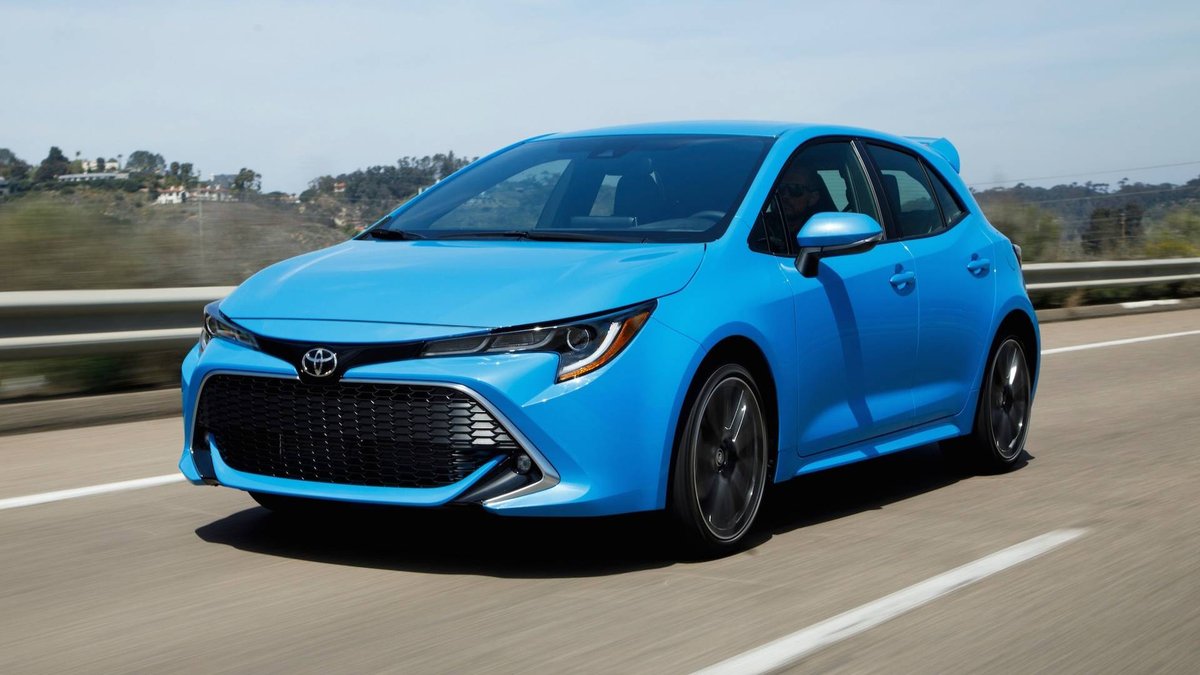
Few vehicles command the same level of global recognition and trust as the Toyota Corolla. Since its debut in the mid-1960s, this unassuming sedan has quietly achieved monumental success, selling over 33 million units worldwide and earning an undeniable reputation for reliability, economical functionality, and unwavering safety. More than just a car, the Corolla represents a consistent promise of dependable, durable, and comfortable transportation for families and individuals across generations.
Its journey from a compact, rear-wheel-drive economy car to a sophisticated, technologically advanced global bestseller is a testament to Toyota's commitment to continuous improvement and adaptation. The Corolla has not just survived, but thrived, evolving through a dozen distinct generations, each one building on the legacy of its predecessors while introducing innovations that kept it relevant in a rapidly changing automotive landscape. From its first appearance in the U.S. in 1968 with the E10, to its most recent iterations featuring hybrid powertrains and performance-oriented GR models, the Corolla's evolution is a rich tapestry of engineering and design milestones.
The Foundational Years: Setting the Stage for Success
The initial generations of the Toyota Corolla laid the groundwork for its enduring legacy. These early models, often characterized by a four-model-year life cycle, prioritized affordability and practicality, quickly endearing themselves to a global audience. The E10, E20, and E30 series established the Corolla as a reliable choice, perfectly suited for the burgeoning car markets around the world. These were the years of defining its core identity. To truly understand the Corolla's incredible origin story and its worldwide debut, readers can Discover Early Generations Foundations Explore Global.
Pivoting Towards the Future: Front-Wheel Drive and Market Adaptation
As the automotive world began to shift, so did the Corolla. The transition to front-wheel drive (FWD) marked a significant engineering and design transformation, allowing for more interior space and improved fuel efficiency. Generations from the fourth to the seventh saw the Corolla grow in stature and sophistication, increasingly tailoring its offerings to meet diverse market demands. This era also saw life cycles extend to five or six years, reflecting a maturing design process and market stability. For a detailed look at this pivotal change and how the Corolla navigated market shifts, you’ll want to Uncover 4th-7th Gen FWD shifts.
Entering the Modern Era: Enhanced Safety, Comfort, and Efficiency
The turn of the millennium brought a new focus for the Corolla: blending its core values with contemporary expectations for safety, comfort, and advanced features. The eighth through eleventh generations witnessed substantial advancements. The 1997 Corolla, for instance, boasted an American lineage, sharing an assembly plant in Fremont, California, and serving as the basis for the Geo Prizm, highlighting its deep integration into the North American market.
The 9th generation (E120/E130), debuting as a 2003 model, brought a refreshed look for 2005-2008. It typically featured a 130-hp 1.8L four-cylinder engine with a choice of five-speed manual or four-speed automatic transmissions. A notable addition was the sporty XRS trim, which offered a high-revving 170-hp 1.8L engine paired exclusively with a six-speed manual. Standard and optional safety features across these generations began to include side-impact and curtain airbags, anti-lock brakes with electronic brake-force distribution, and Vehicle Stability Control, evolving from models like the 2001 realignment that established CE as the base model and introduced a new S version.
The 10th generation (E140/E150), redesigned around 2009-2010, grew larger and introduced a more powerful 158-hp 2.4L four-cylinder engine alongside the familiar 132-hp 1.8L base engine. A facelift between 2011 and 2013 saw the discontinuation of the 2.4L XRS model, streamlining the lineup. Then came the 11th generation (E170) in 2014, featuring a significantly redesigned look that ran for six years. It was powered by an improved 1.8L inline four-cylinder engine (offering 132 or 140 hp), with transmission options including a six-speed manual, four-speed automatic, or a Continuously Variable Transmission (CVT). A mid-cycle facelift for 2017-2019 enhanced safety features and added cosmetic updates, keeping powertrains unchanged. For an in-depth review of how the Corolla evolved through these pivotal periods, you can Explore modern era innovations.
The Current Chapter & Future Vision: TNGA, Hybridization, and Performance
The 12th generation (E210), launched in 2019 as a 2020 model, represents a major leap forward, built on the highly praised Toyota New Global Architecture (TNGA) platform. This generation heralded the introduction of high-performance, rally-bred AWD GR models, showcasing the Corolla's expanded capabilities. Standard naturally aspirated four-cylinder engines included a 139-hp 1.8L and a more potent 168-hp 2.0L, both available with FWD and a choice of manual or CVT transmissions. Hybrid models joined the lineup, powered by a fuel-efficient 121-hp 1.8L powertrain paired with a CVT, marking a clear direction towards sustainable mobility. A mid-cycle refresh for the 2023 model year further refined the offering, increasing the 2.0L engine to 169 hp and discontinuing the 1.8L engine. Looking ahead, the 2026 Toyota Corolla arrived as a carryover model with updates and a limited Hatchback FX Edition, while the 2028 Toyota Corolla is anticipated as a refreshed model, promising continued evolution. For insights into its contemporary evolution and what lies ahead, Current & Future Outlook (12th generation onward provides a comprehensive look at the modern and future Corolla.
Engineering Excellence Across the Decades: Key Milestones
The Corolla's enduring success isn't just about evolving designs; it’s deeply rooted in consistent, thoughtful engineering. From pioneering compact design to integrating advanced safety systems like those found in the 2019 model (with its 1.8-liter gas engine delivering 132 horsepower and 128 pound-feet of torque across six trim levels for just over $19,000), Toyota has continuously pushed boundaries. Whether it's the development of robust engines that achieve EPA-estimated 28/37 mpg City/Highway in earlier models (like the 126-horsepower 1.8-liter four-cylinder in CE, S, and LE trims), or the strategic decision to adopt a more rigid TNGA platform, each generation introduced significant enhancements. These milestones have collectively shaped the Corolla's reputation for unmatched reliability and value. To appreciate the intricate journey of its technical and aesthetic development, we invite you to Explore design & engineering milestones.
The Toyota Corolla's journey through its generations is a compelling narrative of innovation, resilience, and unwavering dedication to its core promise. It's a legacy built on consistently delivering quality transportation that evolves with the times while remaining true to its fundamental principles. As we look towards the future, the Corolla continues to adapt, embracing new technologies and designs, ensuring its place as a global bestseller for many more decades to come.